
Personal Branding for Executives: How a CEO’s Reputation Can Drive Business Growth
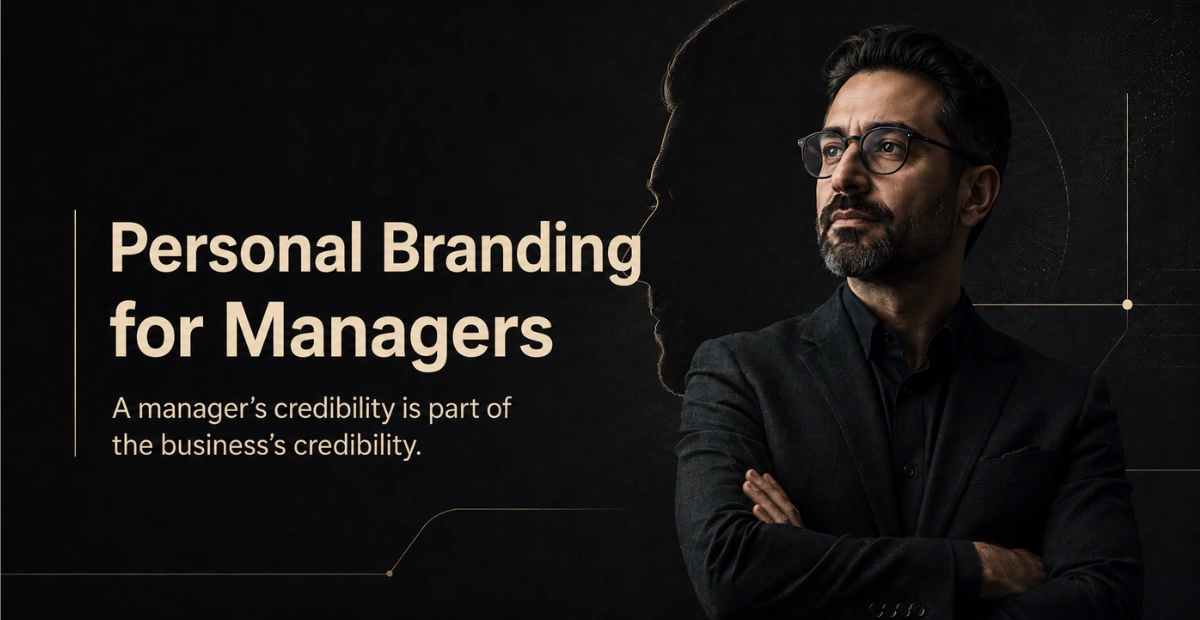
For years, there was a common belief that the brand belonged to the company, while executives were supposed to remain behind the corporate name.
Today, that line is far less clear.
Before a meeting, partnership, investment, hiring decision, or even a sales conversation, people can search an executive’s name within seconds and form an impression.
That impression exists whether the executive has intentionally shaped it or not.
This is why personal branding for executives is no longer something reserved for influencers, speakers, consultants, or content creators.
For CEOs, founders, and business leaders, a personal brand can become part of the company’s commercial credibility.
But there is an important distinction:
Building an executive personal brand does not mean turning a CEO into an internet personality.
The goal is to make sure that when a client, investor, partner, potential employee, or industry peer comes across that executive’s name, they can quickly understand who they are, what they know, what they stand for, and why their perspective matters.
What Is Personal Branding for Executives?
An executive personal brand is the perception the market has of a leader’s expertise, reputation, leadership style, experience, perspective, and track record.
It is not created by a professional headshot, a polished LinkedIn profile, or a few social media posts alone.
A CEO’s personal brand is built through the combination of what people see, hear, and experience:
- the topics they speak about;
- the problems they are known for solving;
- the decisions they make;
- the results they have created;
- how they treat clients and employees;
- their perspective on the industry;
- the content they publish;
- and even the subjects they deliberately choose not to comment on.
Put simply, an executive personal brand answers one question:
How does the market describe you when you are not in the room?
If the answer is unclear, the market will create that perception on its own.
If you intentionally build your brand, you have a much greater ability to shape it.
Personal Branding Is Not the Same as Becoming Famous
One of the biggest misconceptions about personal branding is confusing it with popularity.
Someone can have hundreds of thousands of followers without being associated with any meaningful expertise.
Another executive may have only a few thousand highly relevant followers and still be recognized as one of the most credible voices in their industry.
For most business leaders, the second scenario creates significantly more commercial value.
The purpose of executive personal branding is not simply to increase the number of people who know your name.
The objective is to increase the number of relevant people who understand why your expertise and perspective deserve their attention.
As I have discussed before, more followers do not automatically create a stronger brand. Reach and reputation are not the same thing.
Why Does a CEO’s Personal Brand Affect the Company Brand?
Customers do not build relationships with logos alone.
Every business has people behind it, and in many companies, the CEO or founder becomes the most visible human representation of the brand.
This is particularly important in B2B businesses, professional services firms, startups, consulting companies, and industries where trust plays a major role in the buying decision.
Imagine two companies offering similar services.
The CEO of the first company has almost no visible professional presence. There is very little information about their experience, point of view, expertise, or track record.
The CEO of the second company regularly shares useful perspectives about the industry, explains business decisions, discusses lessons from experience, and demonstrates a clear understanding of the market.
Before a potential client has even spoken to either company, two very different levels of familiarity and trust have already been created.
This is where a strong CEO personal brand can support the sales process before the first sales conversation even begins.
Executive Personal Branding Is Not Only About Getting More Clients
If you view personal branding only as a sales tool, you miss much of its potential value.
A strong executive brand can support both the individual leader and the company in several ways.
1. Building Initial Trust
When someone first discovers your business, they may search for the founder or CEO.
If what they find is credible, consistent, relevant, and professional, that initial layer of trust becomes easier to establish.
2. Strengthening the Company’s Credibility
In many businesses, the reputation of the executive and the reputation of the organization reinforce each other.
A leader who is respected for their knowledge, experience, and judgment can transfer some of that credibility to the company they lead.
3. Creating New Business Opportunities
Not every valuable opportunity comes from advertising or outbound sales.
Some of the best partnerships begin through referrals, professional networks, industry conversations, search results, and high-quality thought leadership.
A strong personal brand increases the likelihood that you will be noticed and remembered when those opportunities appear.
4. Attracting Better Talent
Strong candidates do not only research companies.
They research the people leading them.
An executive’s philosophy around leadership, growth, culture, people, and the industry can influence whether a talented professional wants to join the organization.
5. Building Long-Term Professional Equity
Job titles change.
Companies can be acquired, merged, sold, or transformed.
But the professional credibility an executive builds around their own name can continue throughout their career.
That makes a personal brand a long-term professional asset rather than a short-term marketing campaign.
Does Every CEO Need to Become a Content Creator?
No.
This is one of the most important principles in executive personal branding.
A CEO does not need to become a social media manager.
They do not need to publish videos every day, comment on every trend, or document their personal life online.
The right visibility strategy should match the executive’s personality, industry, audience, schedule, and business objectives.
For one executive, the most effective approach may be publishing one thoughtful LinkedIn post each week.
For another, podcasts, interviews, conference appearances, or long-form articles may work better.
Another executive may publish only twice per month but consistently reach the right decision-makers in their industry.
So the right question is not:
How many posts should I publish every week?
The better question is:
What type of visibility will help me build the position I want in the market?
What Should an Executive Be Known For?
This is one of the hardest parts of building a personal brand.
Most experienced executives know a lot about many different subjects.
But being able to speak about ten different topics does not mean you should try to become known for all ten.
The market needs to associate your name with a small number of clear ideas or areas of expertise.
For example, an executive may want to become known for:
- B2B growth;
- technology leadership;
- startup building;
- international expansion;
- digital transformation;
- luxury brand management;
- investment;
- or a specific area of expertise within their industry.
The problem begins when an executive talks about leadership today, motivation tomorrow, artificial intelligence the next day, and then jumps to another unrelated trend simply because it is receiving attention.
That content may generate views.
But views do not necessarily create positioning.
Move Beyond the Resume and Show How You Think
One of the weakest forms of executive personal branding is turning every piece of content into a résumé update.
“I attended this event.”
“I received this award.”
“I met with this person.”
“I spoke at this conference.”
These posts can provide useful credibility signals, but if they become the entire brand, the audience learns very little about how the executive actually thinks.
A strong personal brand emerges when people understand not only what you have done, but also how you think.
An experienced leader might share perspectives such as:
- why certain hiring decisions fail before the employee even starts;
- when rapid growth becomes dangerous for a company;
- why certain KPIs can create a misleading picture of performance;
- how they think about the trade-off between growth and profitability;
- a leadership mistake that became an expensive lesson;
- or an industry trend they believe is being overestimated or underestimated.
At this point, content is no longer just evidence that the executive is “active online.”
It becomes evidence of the quality of their thinking.
Should the CEO Brand and Company Brand Be the Same?
Not exactly.
The two brands should support each other, but they do not need to be identical.
The company has its own positioning, values, tone, target market, and brand messages.
The executive also has their own experience, personality, beliefs, professional history, and point of view.
The strongest approach is usually one where the two brands reinforce each other.
For example, if a company positions itself around innovation while its CEO appears publicly resistant to change and never discusses developments in the industry, there is a disconnect.
On the other hand, if the CEO’s personal brand becomes completely disconnected from the organization, much of the potential commercial value is lost.
There needs to be a balance between the executive’s independent professional identity and their role as a representative of the organization.
The Biggest Personal Branding Mistake Executives Make
The biggest mistake is usually not a lack of content.
The problem is starting with content before defining positioning.
A company hires an agency or content team.
A publishing calendar is created.
Video production begins.
Several months later, there is a large volume of content but no clear answer to fundamental questions:
- What should this executive be known for?
- Who is the primary audience?
- Why should that audience care about their perspective?
- What differentiates their point of view from other executives?
- What business result is this visibility supposed to create?
This is the difference between producing content and building a brand.
An active profile is not necessarily a strong brand.
Where Should Executive Personal Branding Start?
Before choosing platforms or building a content calendar, several fundamental questions need to be answered.
1. What Is the Business Objective?
Why are you building a personal brand?
Do you want to attract clients?
Build a stronger professional network?
Recruit talent?
Raise capital?
Enter a new market?
Become recognized as an industry authority?
Generate speaking opportunities?
Position yourself for board roles?
Your objective will influence almost every decision that follows.
2. Who Is the Priority Audience?
You do not need everyone to follow you.
Your most important audience may be other executives, investors, industry professionals, B2B clients, potential employees, or partners.
Your brand becomes much more focused once you know whose perception you are trying to influence.
3. What Position Do You Want to Own?
When your name comes up, what expertise or perspective should people associate with you?
The answer should be more specific than broad terms such as “business,” “leadership,” or “management.”
The clearer the positioning, the easier it becomes to build relevant content and credibility around it.
4. What Evidence Supports That Position?
Personal branding cannot be built on claims alone.
Experience, projects, measurable results, case studies, decisions, analysis, and professional history make your positioning believable.
Your communication should reveal evidence rather than simply repeat statements such as “I am an expert.”
5. Which Channels Make Sense?
You do not need to be everywhere.
For one CEO, LinkedIn may be the most important platform.
For another, industry publications, conference appearances, podcasts, or a personal website may create more value.
The platform should follow the strategy, not define it.
What Type of Content Works for Executive Personal Branding?
Strong executive content usually offers more than generic educational advice and motivational quotes.
Several types of content can work particularly well.
Industry Analysis
Discuss changes happening in your market from the perspective of your experience.
Do not simply repeat the news.
Explain what the development means, what others may be missing, and how you believe it could affect the industry.
Leadership Perspective
Share clear thinking about hiring, growth, management, strategy, customers, products, operations, or your specific area of expertise.
Real Experience
Something you have personally experienced will often be more valuable than a rewritten version of a generic business article.
Behind the Decision
Without revealing confidential information, explain why an important decision was made, what alternatives existed, and what you learned from the outcome.
Case Studies
Case studies show that you do not only talk about your work.
They demonstrate that you have actually done it.
Original Point of View
If you say exactly what everyone else in your industry is saying, there is little reason for people to remember you.
Having a distinctive point of view does not mean manufacturing controversy.
It means communicating conclusions that come from your own experience, observation, and thinking.
When Can a CEO’s Personal Brand Hurt the Business?
A personal brand is not automatically an advantage.
When it is built without strategy, it can also create risk.
For example:
- the executive comments on every political, social, or trending topic regardless of its relevance to their professional position;
- their public behavior strongly contradicts the values the company claims to represent;
- the entire reputation of the company becomes dependent on one individual;
- the content becomes more focused on displaying success than sharing useful perspective;
- the executive speaks with authority about subjects outside their actual expertise simply to increase reach;
- or the content team creates a voice that sounds nothing like the executive in real life.
A good personal brand should be a clearer and more intentional version of the real person.
It should not be a fictional social media character.
How Do You Know Whether an Executive Personal Brand Is Working?
Followers, views, and likes can provide useful data, but they are not the final measure of success.
For an executive, more meaningful signals may include:
- an increase in branded searches for the executive’s name;
- invitations to interviews, events, podcasts, or conferences;
- more relevant professional connections;
- new partnership opportunities;
- sales leads who already know the executive before the first meeting;
- growth in direct traffic and branded search;
- being associated with specific areas of expertise;
- and people referencing or sharing the executive’s ideas.
If the audience is growing but none of these outcomes are improving, the strategy may need to be reconsidered.
Your Personal Brand Should Become an Asset, Not Another Full-Time Job
Many executives hear the phrase “personal branding” and immediately imagine another responsibility being added to an already overloaded schedule.
It should not work that way.
A well-designed system does not require the CEO to spend hours creating content every day.
Existing experiences, meetings, decisions, presentations, client questions, internal discussions, and real business situations can all become inputs for a content system.
A team can support research, editing, design, production, distribution, and repurposing.
But the underlying thinking needs to remain authentic to the executive.
The strongest executive brands rarely look like content factories.
They have something more valuable:
Something meaningful to say.
Final Thoughts: An Executive Does Not Need to Be Famous, but Being Professionally Invisible Has a Cost
There is no rule saying every CEO needs to become a public figure.
But there is an important difference between not being famous and being professionally invisible.
If a potential client, partner, investor, journalist, or talented professional searches your name and cannot understand your expertise, experience, or point of view, a significant amount of your professional credibility remains unused.
Personal branding for executives is ultimately about managing that credibility.
It is about making sure the market understands who you are, what you know, how you think, and why your perspective deserves attention.
Content comes after that.
If you are still building the foundations, start with my guide on how to build a personal brand.
If you have already spent years building a company or developing expertise but feel that your online presence does not reflect your actual level of experience, the problem may not be that you need more content.
You may need to reconsider your positioning, message, and overall personal brand strategy first.
If you want to evaluate the gap between your current reputation and the position you want to own in the market, explore my personal branding and brand audit services.