How to Build a Personal Brand Complete Guide to Personal Branding
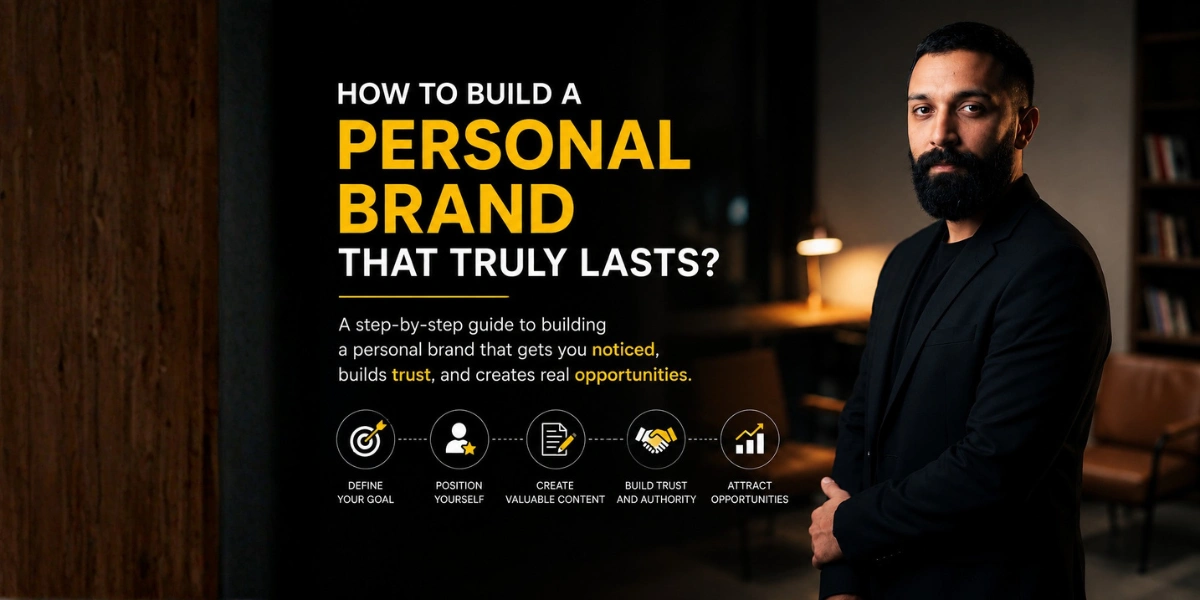
Having strong skills, experience, or expertise is no longer enough. Today, many professionals are good at what they do, but they are not visible, they do not build enough trust, and they miss valuable opportunities. The reason is simple: they do not have a clear personal brand.
A personal brand is the image people have in mind when they hear your name. It tells them who you are, what you do, what problem you solve, and why they should trust you.
Building a personal brand is not just about posting on Instagram, having a professional profile photo, or writing a strong bio. Personal branding is a strategic process built through self-awareness, positioning, targeted content, trust-building, and consistency.
In this article, we will walk through how to build a powerful personal brand step by step; one that does not just get attention, but also creates trust and turns visibility into real opportunities.
What Is a Personal Brand?
A personal brand is the perception people have of you. It is shaped by your behavior, content, expertise, results, values, communication style, and the overall experience people have with you.
In simple terms, your personal brand answers this question:
“What do people know you for?”
For example, one person may be known as a business consultant, while another may be known as a consultant who helps coaches and educators attract clients through content. Both work in the business space, but their positioning is different.
A strong personal brand is created when your audience can associate you with a clear expertise, message, or outcome.
Why Is Personal Branding Important?
Today’s market is crowded. In almost every industry, many people offer similar services, publish content, and compete for attention. In this environment, the person who wins is not only the most skilled one, but the one who is clear, trustworthy, and memorable.
Building a personal brand helps you:
- Become more visible.
- Build trust faster.
- Stand out from price-based competition.
- Attract better business opportunities.
- Reach more relevant clients.
- Stay memorable in your audience’s mind.
- Turn your expertise into income and opportunities.
When you have a clear personal brand, people already know a lot about you before they ever book a call, send a message, or consider working with you. They understand how you think, what value you provide, and why they should choose you.
The Difference Between Personal Branding and Being Famous
One common mistake is confusing personal branding with becoming famous. Being famous means many people know you. Having a strong personal brand means the right people know you for the right reason.
Someone may have many followers but no clear position in the audience’s mind. On the other hand, someone with a smaller audience may be highly trusted and respected in a specific field.
The goal of personal branding is not to be known by everyone. The goal is to be recognized by the right audience as a trusted person who can solve a specific problem.
Step 1: Define Your Goal for Building a Personal Brand
Before you start creating content, you need to know why you want to build a personal brand. Without a clear goal, your brand will become scattered and directionless.
Ask yourself:
- What result do I want my personal brand to create?
- Do I want to attract more clients?
- Do I want to be recognized as an expert?
- Do I want to sell consulting, courses, or services?
- Do I want to receive speaking, partnership, or collaboration opportunities?
- Do I want to strengthen my existing business?
Your goal shapes your personal brand strategy. Someone who wants to attract clients needs a different content strategy than someone who only wants to become known as a thought leader.
Without a clear goal, you may talk about motivation today, lifestyle tomorrow, sales next week, and after a while your audience will not understand why they should follow you.
Step 2: Decide What You Want to Be Known For
One of the most important questions in personal branding is:
“What do I want people to know me for?”
This is the foundation of your positioning. If you are not clear about what you want to be known for, your audience will not be able to build a clear image of you either.
To answer this question, think about:
- What is my core expertise?
- What problem do I solve better than others?
- Who is my target audience?
- What result can I help them achieve?
- What perspective, experience, or method makes me different?
For example, saying “I work in digital marketing” is too broad. But saying “I help personal brands build trust and attract clients through content” is much clearer and easier to remember.
A strong personal brand starts with clarity. The clearer your positioning is, the easier it is for people to remember you.
Step 3: Understand Your Target Audience
A personal brand is not built for everyone. If you try to appeal to everyone, you usually become important to no one.
You need to know who your main audience is. What problem do they have? What are they worried about? What goal are they trying to reach? What questions are already in their mind? Why should they pay attention to you?
Understanding your audience helps you make your message, content, and offer more specific.
To understand your audience better, ask:
- What stage are they currently in?
- What is their biggest problem?
- What have they already tried that did not work?
- What are they afraid of?
- What result matters most to them?
- What language do they use?
- What type of content do they consume most?
When you understand your audience deeply, your content stops being generic and starts speaking directly to real needs and concerns.
Step 4: Create Your Personal Brand Message
Your personal brand message is the core statement that explains who you are, who you help, and what result you create.
A good brand message should be simple, clear, and easy to understand. People should not have to work hard to understand what you do.
A simple formula for creating your personal brand message is:
“I help [target audience] achieve [specific result] through [your method or expertise].”
For example:
“I help professionals and business owners build a personal brand that creates trust and attracts better clients.”
This message can become the foundation of your bio, introduction, about page, social media content, and even your service offer.
Step 5: Do Not Just Claim Expertise; Build Proof
In personal branding, claims are not enough. Saying “I am an expert” does not automatically create trust. Your audience needs to see proof of your expertise.
Proof can include:
- Portfolio examples
- Client results
- Real experiences
- Case studies
- Expert analysis
- In-depth educational content
- Behind-the-scenes project insights
- Your learning and execution journey
- Testimonials and client feedback
Trust is not built by repeating claims. It is built by showing evidence.
If you are just starting and do not have many client results yet, you can document your journey. Share what you are learning, testing, building, analyzing, and improving. The important thing is to show that you are actively growing and applying your knowledge.
Step 6: Define Your Personal Brand Content Pillars
Creating content without clear content pillars leads to confusion. Content pillars are the main topics your brand consistently talks about.
For a professional personal brand, your content should not be limited to education only. You need to show your expertise, build trust, communicate your personality, and create a path toward your offer.
Educational Content
This type of content helps your audience learn something, understand a problem, or take a practical step.
Examples:
- Explaining a concept
- Breaking down a common mistake
- Sharing a step-by-step framework
- Answering frequently asked questions
- Analyzing an industry topic
Authority-Building Content
This content helps you build trust and credibility. It shows that you do not just talk, but also have experience and results.
Examples:
- Portfolio work
- Client results
- Before-and-after project examples
- Case studies
- Behind-the-scenes project execution
- Lessons from real client work
Personal and Human Content
People do not connect only with expertise. They connect with the human behind the expertise. Personal content makes your brand feel more real, relatable, and memorable.
Examples:
- Your professional journey
- Values and beliefs
- Lessons from failure
- Personal views about your industry
- Important decisions you have made
Sales and Call-to-Action Content
If you only educate and never create a clear path for people to work with you, your personal brand will not turn into business results. Your audience should know how they can take the next step.
Examples:
- Introducing your services
- Inviting people to a consultation call
- Explaining your work process
- Presenting a course or product
- Answering common objections before purchase
A successful personal brand does not only create content. It also designs a path that turns attention into trust and trust into clients.
Step 7: Choose One Main Platform for Content Distribution
One common mistake is trying to be active on every platform at the same time. This usually leads to burnout, inconsistency, and lower content quality.
At the beginning, choose one main platform and focus on it. This could be Instagram, LinkedIn, YouTube, a personal website, a podcast, or an email newsletter.
Choose your main platform based on three factors:
- Where does your target audience spend time?
- Which content format fits your strengths?
- Which platform supports your business goals best?
For example, if your audience includes professionals, managers, and business owners, LinkedIn and a personal website can be very effective. If you create educational video content, Instagram and YouTube may be better options.
The key is to have a main channel. But do not build your entire personal brand only on social media. A website, blog, and email list can become much stronger long-term assets.
Step 8: Be Consistent, But Do Not Create Content Blindly
Consistency is important in personal branding, but consistency does not mean publishing random content just to look active.
Your content should gradually build a clear image of you. After seeing several pieces of your content, people should understand what you talk about, what value you provide, and how you can help them.
A realistic starting schedule could look like this:
- 2 educational posts per week
- 1 personal or experience-based post per week
- 1 trust-building or soft sales post per week
The plan must be realistic. True consistency is better than an overly ambitious plan that only lasts two weeks.
Step 9: Document Your Journey
Many people think they need unique and original ideas all the time to build a personal brand. But one of the most effective ways to create content is documenting your journey.
Instead of always creating content from scratch, extract content from your real experiences.
Ask yourself:
- What did I learn this week?
- What challenge did I face?
- What mistake did I make?
- What important decision did I make?
- What question did someone ask me?
- What result did I create for myself or a client?
- What belief do I have that could help my audience?
Documenting your journey makes your content more real and more differentiated because it comes from your own experience, not from copying generic ideas.
Step 10: Make Your Visual and Verbal Identity Consistent
Personal branding is not only about content. The way you present yourself also matters. Your audience should experience consistency when they interact with you.
Your personal brand identity includes:
- Writing tone
- Speaking style
- Colors and design style
- Photos and videos
- The way you introduce yourself
- The user experience on your website and social media
You do not need everything to be perfect at the beginning. But there should be consistency. If one day you communicate in a very formal tone, the next day you sound completely casual and unrelated, and then you publish content on random topics, your audience will struggle to build a stable image of you.
Step 11: Take Networking Seriously
A personal brand is not built only by publishing content. Your relationships also matter. Interacting with the right people, joining relevant conversations, collaborating with others, and building professional relationships can accelerate your growth.
For effective networking:
- Leave valuable comments under relevant content.
- Connect with professionals in your field.
- Join events, webinars, and expert discussions.
- Collaborate with complementary people or brands.
- Do not only look for opportunities; create value too.
A personal brand does not grow in isolation. The stronger your professional relationships are, the more opportunities you create for visibility and trust.
Step 12: Connect Your Personal Brand to a Clear Offer
One of the most important parts of personal branding is making the next step clear. If someone trusts you, they should know exactly how to work with you, buy from you, or contact you.
This path can include:
- Booking a consultation call
- Filling out a collaboration form
- Buying a course
- Downloading a free resource
- Joining an email newsletter
- Sending a message on WhatsApp or direct message
- Visiting your services page
If your personal brand attracts attention but has no clear offer, it may not turn into real opportunities or income.
A strong personal brand connects visibility, trust, and a business offer in a strategic way.
Common Personal Branding Mistakes
On the path to building a personal brand, some mistakes can make you spend a lot of time and energy without seeing meaningful results.
Not Having Clear Positioning
If people do not know exactly what you can be trusted for, it becomes harder for them to remember you. A vague personal brand grows slowly.
Copying Others
Getting inspired is fine, but copying makes your brand feel generic. Your audience needs your real perspective, experience, and voice.
Creating Scattered Content
If you talk about completely different topics every time, your audience becomes confused. Your content should revolve around a few clear themes.
Educating Without Selling
Many professionals create good educational content but never present a clear offer. As a result, people learn from them but never become clients.
Focusing Too Much on Appearance
A professional look matters, but it cannot replace your message, expertise, and credibility. A personal brand is not built with beautiful design alone.
Expecting Fast Results
A personal brand is a long-term asset. You may not see massive results quickly, but if you move with clarity and consistency, the impact compounds over time.
Who Needs a Personal Brand?
Almost anyone who has expertise, experience, or a service that requires trust can benefit from personal branding.
Personal branding is especially important for:
- Consultants
- Coaches
- Educators
- Freelancers
- Doctors
- Lawyers
- Managers
- Entrepreneurs
- Content creators
- Sales and marketing professionals
- Service-based business owners
- Professionals who want to turn expertise into more income
In all these fields, people need to trust the person behind the service before they decide to buy or collaborate.
How Long Does It Take to Build a Personal Brand?
Building a personal brand takes time. You cannot expect to create a strong position in people’s minds with a few posts or a few weeks of activity.
The speed of growth depends on several factors:
- The clarity of your positioning
- The quality of your content
- Your consistency
- The proof and results you show
- How well you understand your audience
- Your ability to build relationships
- The clarity of your business offer
But the important point is this: your personal brand starts working from day one. Even if you are not widely known yet, every strong piece of content, every professional interaction, and every positive experience contributes to your brand.
Personal Branding Checklist
Use this checklist to start building your personal brand step by step:
- Define your goal for building a personal brand.
- Decide what you want to be known for.
- Define your target audience clearly.
- Write your core personal brand message.
- Choose three to five content pillars.
- Select one main platform for content distribution.
- Collect your proof, experiences, and credibility assets.
- Create a realistic content plan.
- Make the path to contact or work with you clear.
- Execute consistently for at least three months, then review and improve.
Frequently Asked Questions About Personal Branding
Do I need many followers to build a personal brand?
No. A large audience can help with visibility, but a strong personal brand does not depend only on follower count. The quality of trust and connection you build is more important than the number of followers.
Can I build a personal brand without creating content?
To some extent, yes. But in today’s digital environment, content creation is one of the most effective tools for building a personal brand. Without content, people have fewer opportunities to understand your expertise, perspective, and values.
Which platform should I start with for personal branding?
The best platform depends on your audience, goal, and strengths. If your audience is professional or business-focused, LinkedIn can be a strong choice. If you create visual or educational video content, Instagram or YouTube may work well. A personal website is also important for long-term credibility.
Is personal branding only for famous people?
No. Personal branding is useful for anyone who wants their expertise to be seen, trusted, and turned into better opportunities. Consultants, educators, freelancers, and service-based business owners can all benefit from it.
What is the most important principle in personal branding?
Clarity. Until you know who you are, who you help, and what you want to be known for, content creation and social media activity will not produce sustainable results.
Conclusion
Building a personal brand means creating a clear, trustworthy, and memorable image of yourself in your audience’s mind. This image is not built through claims alone. It is built through clear goals, strong positioning, targeted content, real proof, and consistency.
If you want to build a powerful personal brand, start with clarity. Define what result you want, who your audience is, what problem you solve, and why people should trust you.
A strong personal brand does not only help you become visible. It helps you become visible to the right audience, for the right reason, and in a way that can turn into opportunities, collaborations, and income.
If you want to build your personal brand more strategically and create a clear path from visibility to trust and client acquisition, you can use professional personal branding and content strategy consulting.